In earlier modules, when we have talked about the nervous system it has been in terms of single cells. But of course the nervous system is made up of large numbers of neurones and can really only function if these neurones are able to communicate effectively with each other. This communication takes place at a structure known as a synapse and the physiological process is referred to as synaptic transmission.
Synaptic transmission is an important topic and has practical implications in a number of different fields:
Biology

Many animals defend themselves or capture prey using toxins that block synaptic transmission. For example taipoxin from the venom of the Australian taipan (Oxyuranus scutellatus) is the most lethal neurotoxin yet isolated from any snake. Taipoxin blocks transmission between neurones and skeletal muscle fibres causing paralysis of respiratory muscles and death by asphyxia.

Medicine
Many neurological diseases are caused by synaptic transmission dysfunction. For example alterations in synaptic transmission efficacy in the central nervous system are thought to be responsible for disorders such as Parkinson’s disease, schizophrenia and depression.
Pharmacology
Because the nervous system is one of the two major control systems in the body it is probably not surprising that many therapeutic and recreational drugs mediate their effects by modifying synaptic transmission.
Strictly-speaking the term synapse refers to the region of communication between neurones. When we talk about interactions between neurones and muscle we refer to this as the neuromuscular junction and when neurones communicate with other tissues (glands etc.) it is known as a neuroeffector junction. Although the terminology differs, synapses, neuromuscular junctions and neuroeffector junctions are functionally very similar. For this reason we will focus on synapses in this lesson.
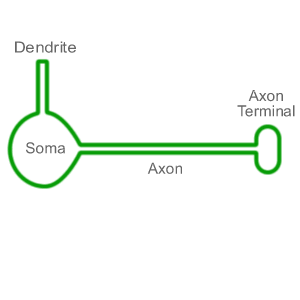
There are three different ways in which neurones can interact with each other:
When the axon terminal of one neurone forms a functional contact with the dendrite of another neurone this is known as an axodendritic synapse. These are by far the most common types of synaptic interactions in the nervous system. 
When the axon terminal of one neurone forms a synapse with the cell body (soma) of another neurones this is known as an axosomatic synapse.
Finally there is a fairly unusual interaction where the axon terminal of one neurone forms a functional contact with the axon terminal of another neurone. This is known as an axoaxonic synapse.
These types of synapse are involved in modulating (fine-tuning) the process of synaptic transmission.
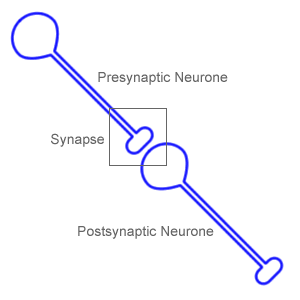
Because information usually flows from the axon terminal of one neurone to the next neurone in the pathway, we refer to the neurone where the signal originates as the presynaptic neurone to distinguish it from the postsynaptic neurone that receives the information by way of synaptic transmission.
At synapses the membrane of the two neurones come very close but are separated by a distinct gap referred to as the synaptic cleft.
The opposing membranes of the presynaptic and postsynaptic neurones adjacent to the cleft are referred to as the presynaptic membrane and postsynaptic membrane respectively.
The close apposition of the two neurones is not sufficient for information to flow between them. It has been shown that if there is no synapse present an action potential in one neurone only produces a very very small depolarisation (around 1 microvolt) in an adjacent neurone. Clearly this is insufficient to open voltage-gated Na+ channels in the postsynaptic cell and trigger an action potential.
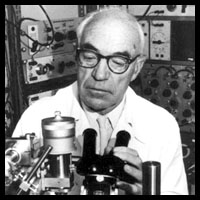 |
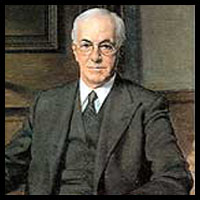
If the close apposition of two neurones is not enough to enable communication how then is an action potential in one neurone relayed to another at a synapse? This question vexed medical scientists in the 1920s and 30s who were able to demonstrate communication between neurones but were unsure as to the mechanism. Two major schools of thought developed: The group led by Australian John Eccles (left) Another group headed by Henry Dale (right) |
 |
With improved physiological recording techniques in the 1950s and the enhanced resolution of the electron microscope it soon became clear that both forms of synaptic transmission exist. We will consider the structure and function of these two types of transmission in subsequent parts of this lesson.