Given the complexity of the physiological variables regulated by the endocrine system, it probably isn’t surprising that the systems that control hormone secretion are themselves quite diverse. There are three basic control systems:
A. Circadian Rhythms
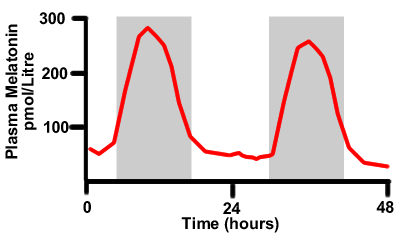
Probably the simplest example of a control system is that which produces the cyclical changes in secretion of hormones such as cortisol, growth hormone and melatonin. Because circulating levels of these hormones oscillate with a frequency close to 24 hours, they are described as having a circadian rhythm (circa is latin for 'about' and diam means 'day'). For example, the graph opposite shows plasma melatonin levels in a human subject recorded over 48 hours. Hours of darkness are highlighted in grey. Note that the levels oscillate with a frequency of 24 hours and that the peak levels of secretion are at night. Adapted from Hastings (1998).
Interestingly some of these rhythms are sustained in subjects exposed to constant light (or dark) as well as in blind people. This suggests that the cells of the endocrine glands themselves have a molecular clock that up- and down-regulates the secretion of these hormones in a cyclical fashion. In this case the control is intrinsic to the hormone secreting cells and no outside influence is required.
B. Negative Feedback
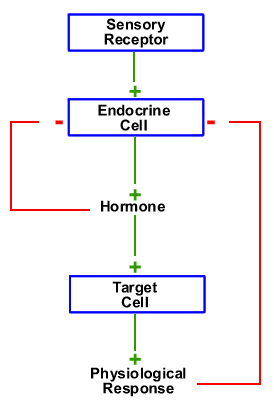
When stable circulating levels of hormones are required to maintain homeostasis the most common form of control is that of negative feedback  . In general terms this means that the hormone itself (or the physiological variable under the control of the hormone) exerts an inhibitory influence (red in the flow diagram opposite) on the cells that produce the hormone. So if the concentration of the hormone (or the physiological variable) increases, then the level of negative feedback increases and the amount of hormone produced declines. Similarly if the hormone (or the physiological variable) declines, then the level of negative feedback declines so hormone secretion increases and restores the status quo.
A good example of this type of negative feedback is the control of circulating levels of thyroid-stimulating hormone (TSH) . TSH is produced by the anterior pituitary gland and stimulates secretion of thyroid hormones (T3 and T4) by the thyroid gland. T3 and T4 are important hormones in the maintenance of a variety of homeostatic variables including basal metabolic rate. Both T3 and T4 have an inhibitory effect on the anterior pituitary gland and through this negative feedback mechanism regulate the circulating levels of TSH within very well defined limits.
C. Positive Feedback
In some circumstances the hormone (or its physiological effect) exerts an excitatory effect on the cells that secrete the hormone. This is much less common than negative feedback because the dramatic increase in hormonal secretion that eventuates is usually only required when reaching a well defined end point is the desired outcome. A good example of this type of positive feedback is the excitatory effect that oestrogen has on gonadotropin secretion during the ovulatory phase of the menstrual cycle in females. This mechanism is will be considered in detail during our coverage of the reproductive systems in Medical Physiology 2 (LQB488) next semester.