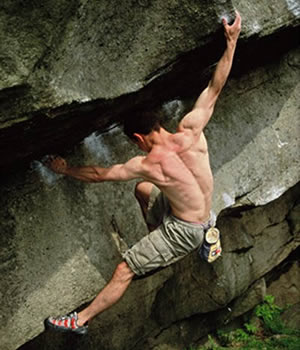
Muscle is one of the four basic tissue types found in the human body and constitutes nearly half our body weight. The muscular system as a whole carries out three very important functions:
A. The movement of the body (or parts thereof) through the environment. Examples of this function include the virtuosity of Brisbane classical guitarist Karen Schaupp
or the power of surfer Molly Picklum
B. The movements of materials through (or out of) the body. Movements of this type include the movement of blood through the cardiovascular system, the movement of digested food through the gastrointestinal tract, or the slightly less elegant expulsion of gastric contents during vomiting.
C. The maintenance of body temperature through heat production.
There are in fact three different types of muscle tissue in the human body.
The largest proportion (constituting around 40% of total body weight) is the muscle which, for the most part, attaches to the skeleton and is known as skeletal muscle.
The remaining muscle mass (making up 10% of body weight) consists of the muscle found in the heart (cardiac muscle) and smooth muscle which is found primarily in the walls of hollow structures such as blood vessels, the digestive tract and organs of the reproductive systems.
In this lesson we will deal exclusively with skeletal muscle.